
The Global Refugee And M?grat?on Congress Br?ef F?nal Declarat?on
258 speakers from 24 countries including Turkey, the USA, Canada, European, Far Eastern and MENA Countries gathered in “The Global Refugee and Migration Congress” hosted by Gaziantep University betwee
19 Ekim 2019 - 07:22
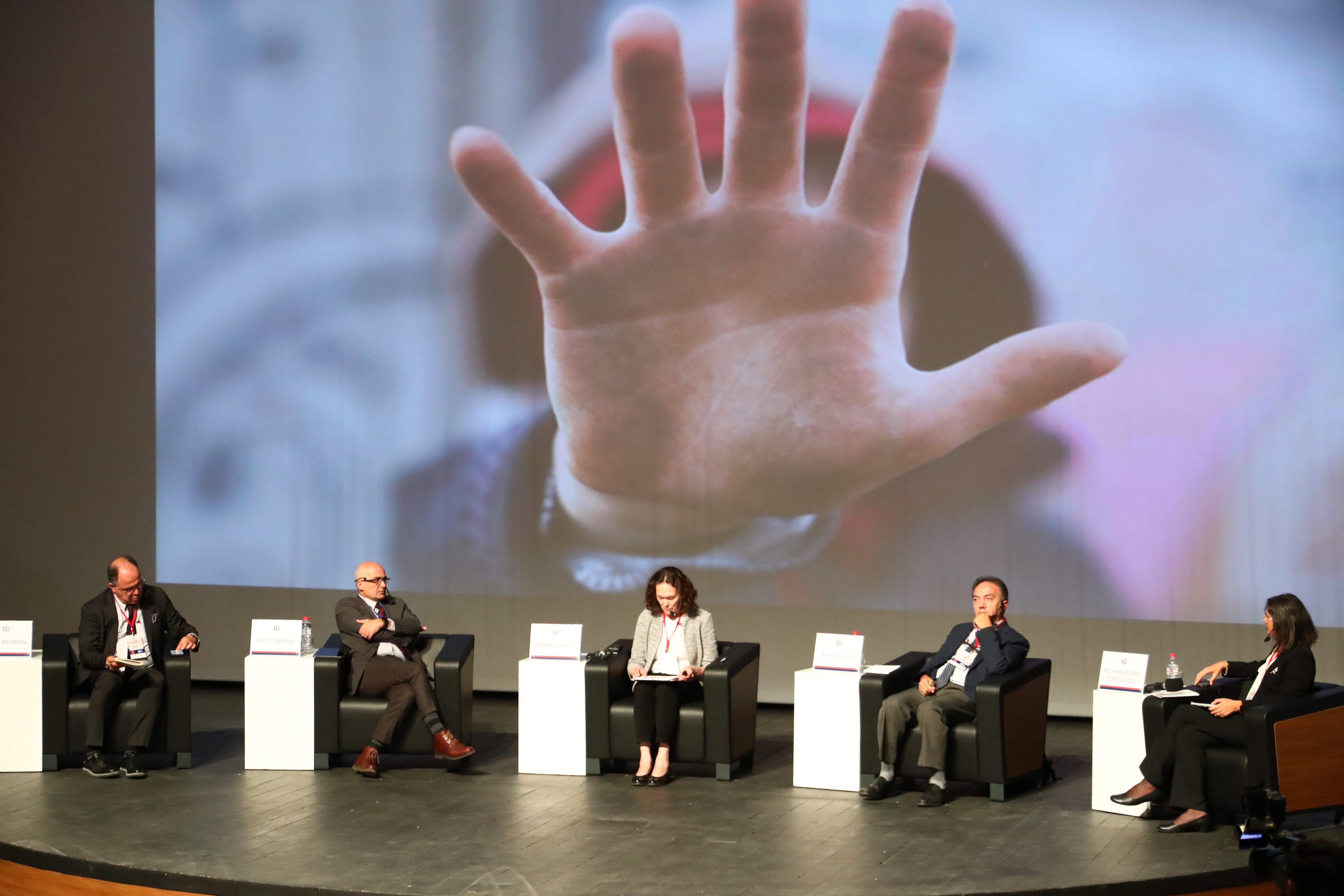
258 speakers from 24 countries including Turkey, the USA, Canada, European, Far Eastern and MENA Countries gathered in “The Global Refugee and Migration Congress” hosted by Gaziantep University between 14 and 17 October, 2019.
In 55 different panels which discussed the developments in the field of migration around the world and in Turkey it has been reached the following conclusions.
1- The presentations underlined the importance of the role Gaziantep University undertook in bringing more than 3000 Syrian students into the higher education. Additionally, what “Institute for Migration” does currently and future plans were explained during the congress.
2- It was emphasized that Turkey, specifically Gaziantep City and Gaziantep University itself, was a role model for the world in the issue of migration and refugees.
3- During 4 days of Congress, the partnerships and collaborations among stakeholders and participants were strengthened and a solid base has been built for new partnerships.
4- The size of the gap among the academics, politicians, field workers and actors in terms of communication and coordination, and the need of collaborations for maintaining successful migration and refugee policies have been indicated.
5- It was highlightedwhile the majority of problems related to mass migration occurred in the global south, in other words, in the developing and underdeveloped countries and regions, the global north, industrialized Western Countries conduct the research in the field and it creates a gap between the reality and knowledge generated. Scholars and academic institutions should avoid reductive interpretation and views which do not reflect the reality of field.
6- It is necessary to train people who are proficient in the regional languages of the Middle East in order to carry out more qualified and field-compatible scientific studies and subsequent realistic policies and practices.
7- Different institutions and organizations, especially universities working on migration and refugees, should coordinate with each other in their efforts to manage, provide and supporthuman life and cohesion processes in areas such as education, health, security and employment.
8- It was stated that the establishing an open-access digital data platform for academic institutions, central and local administrations and units operating in the field of migration would prevent resource wastage, inaccurate and incomplete information, and inaccurate results and policies.
9- The central role of employment in the construction of a new life is important for migrants and refugees. In order to prevent the loss of human capital, it is necessary to evaluate previously acquired knowledge, skills and competences. It was revealed that refugees could not complete their academic and professional equivalence processes and could not perform their professions due to missing documents, lack knowledge of bureaucratic system and language barrier. It is emphasized that the migration and adaptation process will be carried out more properly by eliminating these problems.
10- Another emphasis is placed on the necessity of creating programs for vulnerable groups in employment processes in partnership with universities, NGOs, chambers of commerce and industry.
11- Lack of service providers specialized in the field of migration and integration was stated during the sessions. In order to eliminate the gap in this field, it was mentioned that the departments to train service providers should be opened as soon as possible in universities.
12- Including every level from early childhood education to higher education, a road map should be planned to provide refugees the access to the education system.
13- The importance of supporting the cooperation of the institutions and individuals working for improving the management of refugees' access to health in many regions of the world and defending the rights of health have been demonstrated. It is emphasized that in the field of health, the follow-up and registration of migrants and refugees should go beyond first aid and health workers should be trained. It was stated that screening and support services for the physical and mental health of refugees and migrants should be expanded. In this context, the urgency of providing psychosocial support to children for the treatment of severe traumas related to war and migration is expressed.
14- Dil, kültürel farkl?l?klar ve benzeri durumlar?n sa?l?kl? hizmet al?nmas?n? engelledi?i dikkate al?narak SIHHAT projesi gibi Suriyeli sa?l?k çal??anlar?n?n istihdam?na ve içerilmesine yönelik uluslararas? payda?larla yürütülen çal??malar?n artt?r?lmas? gerekti?i belirtilmi?tir.
Language barrier, cultural differences and other challenges refugees face prevent them to access proper health services. it is stated that the number of projects carried out with international stakeholders regarding the employment and inclusion of Syrian health workers such as SIHHAT project should be increased.AS A RESULT…- “Migration” is a matter of all humanity. The construction of a life in accordance with human dignity depends on the implementation of immigration policies with the participation of all stakeholders and the ethical and moral responsibility of all countries of the world.- Today, oppressed nations are forced to migrate from where they live due to the power struggle in the world.
The wish to establish a world in which there is no forced migration in the future and where people can move freely was stated.- All the topics discussed in this congress repeats one message: At the individual and social levels, efforts should be made to be part of the SOLUTION, not the problem.



YORUMLAR